
Mental Health in Sports: the Statistics, and What They Actually Say
"A third of all elite athletes are depressed." Claims like this circulate widely, and they are almost always misquoted. The research on mental health in elite sport is real and serious – but depending on the study, reported figures range from under 10% to over 30%, and anyone citing a single number in isolation tells you more about their source than about sport. This page collects the figures that hold up, names the study and method behind each, and above all explains why they diverge so much.
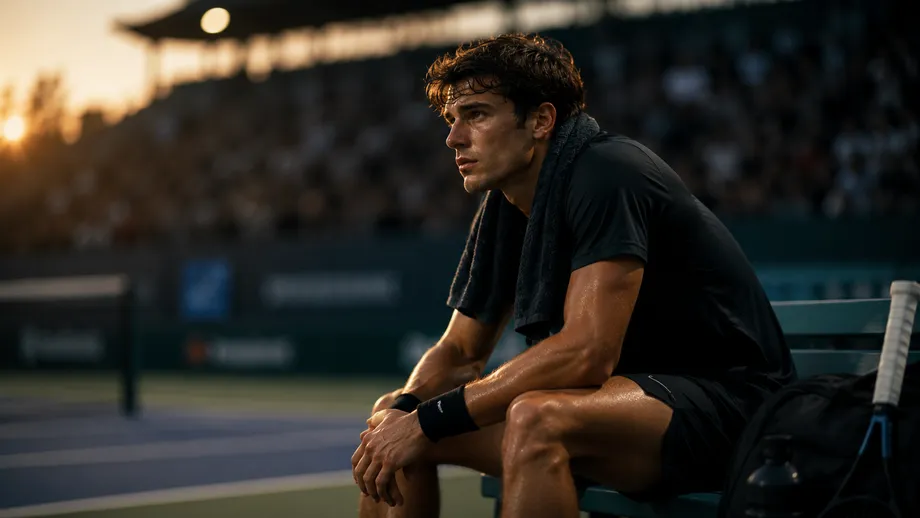
How common are mental health symptoms in elite sport?
International figures. The most widely cited basis is a systematic review and meta-analysis by Gouttebarge and colleagues, published in the British Journal of Sports Medicine in 2019. For current elite athletes it found:
- 33.6% with symptoms of anxiety or depression
- 26.4% with sleep disturbance
- 19.6% with distress symptoms
- 18.8% with alcohol misuse
For former elite athletes, figures ranged from 16% (distress) to 26% (anxiety/depression).
National figures diverge sharply. German surveys land considerably lower. Johanna Belz, in her dissertation at the German Sport University Cologne (2020), examined a sample of 1,799 German competitive athletes:
- 13.4% screened positive for depression
- 10.2% showed impairments in psychological wellbeing
Her summary: "every 10th German competitive athlete was screened positively for depressive symptoms", at a prevalence comparable to the general German population. We return to that point below, because it contradicts the common narrative.
Lower still: a survey at a German elite sports school using the Hospital Anxiety and Depression Scale (Weber et al., 2018, Frontiers in Physiology) reported 9.5% depressive and 7.1% anxiety symptoms.
Why the numbers diverge so much
Between 9.5% and 33.6% sits a factor of three. That is not a contradiction in substance but in method – and anyone using these figures should know why:
- Screening is not diagnosis. Most studies use questionnaires that flag symptoms above a threshold. That is not the same as a clinical diagnosis by a professional. "33.6% reported symptoms" does not mean "33.6% have a disorder" – a distinction that almost always disappears in popular summaries.
- Different instruments, different thresholds. Prevalence shifts substantially depending on which questionnaire and which cut-off value a study uses.
- Stigma biases downward. In the "Dysfunctions of Elite Sport" study by the German Sport University Cologne with the German Sports Aid Foundation (2013, 1,150 respondents), over 40% of participants declined to comment on depressive illness at all. Non-responders are missing from the statistics.
- Different populations. Youth and adult sport, individual and team sport, current and former athletes differ systematically. Country and sporting culture matter too – which at least partly explains the gap between international and German figures.
The practical consequence: always use a figure together with its source and method. A percentage without a study attached has usually been copied from a secondary source.
Are athletes more at risk than other people?
This question is often answered with an implicit "yes" – the evidence is more cautious. A systematic review and meta-analysis by Rice and colleagues (2019, British Journal of Sports Medicine) examined the determinants of anxiety in elite athletes. It screened 1,163 articles, including 61 in the review and 27 in the meta-analysis. Two findings matter:
First, it found no differences in anxiety profiles between athletes and non-athletes, and the determinants broadly mirrored those in the general population. Belz (2020) reaches the same conclusion independently for the German data: the prevalence of depressive symptoms was comparable to the general German population. Two methodologically independent pieces of work, the same result.
Second, clear risk factors were nonetheless quantifiable – moderate pooled effects for career dissatisfaction, female gender, younger age and musculoskeletal injury. A smaller effect appeared for recent adverse life events.
So the defensible statement is not "sport damages mental health", but rather: psychological strain is about as common in sport as outside it – and sport adds its own triggers, chiefly injury and career insecurity.
Performance anxiety is not an anxiety disorder
This distinction is the one most often blurred in coverage, and the most important on this page.
Performance anxiety is situational: it appears before or during competition, centres on performance and evaluation, and responds well to sport-psychology methods. Most athletes experience it in some form – that is normal, and in moderate doses it helps performance. How to work with it is covered in our guide to nerves before a competition.
An anxiety disorder or depression is something else: persistent, present across situations, causing distress in everyday life – and requiring treatment. Mental training is not the tool for that.
What helps – and where mental training stops
The International Olympic Committee consensus statement on mental health in elite athletes (Reardon et al., 2019, British Journal of Sports Medicine) makes two points that matter in practice. Mental health cannot be separated from physical health – mental health symptoms increase injury risk and delay recovery. And interventions have to work on two levels: treating affected athletes and improving the environments in which all athletes train and compete.
For you as an athlete, concretely:
- Mental training is the performance domain: regulating arousal, holding focus, building confidence, recovering from mistakes. That is trainable, and it is what Sync is built for.
- For persistent symptoms – low mood over weeks, sleep problems, avoidance, exhaustion that rest does not fix – seek professional assessment: your physician or sports physician, sport-psychotherapy services, or the designated contacts in your federation.
- In an acute crisis, contact your local emergency services or a crisis line. In the US, the 988 Suicide & Crisis Lifeline is available 24/7 by calling or texting 988. In the UK and Ireland, Samaritans can be reached free on 116 123.
None of this diminishes mental training – it is its precondition. It works in the performance domain, and it does not replace treatment.
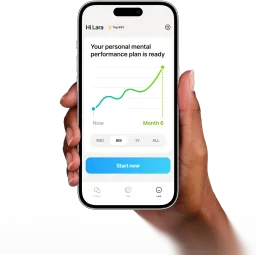
Train mental strength – with Sync
Sync is the mental training app for athletes: a personalised plan, daily sessions and sport-psychology expertise. App-based mental training can improve athletic performance by reducing anxiety and stress while strengthening resilience.
Gao et al., Journal of Medical Internet Research, 2024 · O'Daffer et al., JMIR mHealth and uHealth, 2022
Frequently asked questions
How many elite athletes are affected by mental health problems?
It depends heavily on the study and method. An international meta-analysis (Gouttebarge et al., 2019) found 33.6% of current elite athletes reporting anxiety or depression symptoms. German surveys land considerably lower, at 13.4% (Belz, 2020, German Sport University Cologne, n = 1,799) and 9.5% at an elite sports school (Weber et al., 2018). Importantly, these figures come from screening questionnaires and are not clinical diagnoses.
Are athletes more likely to have mental health problems than non-athletes?
According to the meta-analysis by Rice et al. (2019), no: athletes and non-athletes did not differ in their anxiety profiles, and the determinants broadly matched those of the general population. Sport does add its own risk factors, however, particularly injury and dissatisfaction with one's career.
What is the difference between performance anxiety and an anxiety disorder?
Performance anxiety is situational, centres on performance and evaluation, and responds to sport-psychology methods. An anxiety disorder is persistent, present across situations and causes distress in everyday life – it requires treatment and is not a case for mental training.
Does mental training help with depression?
No. Mental training works in the performance domain – arousal regulation, focus, confidence. For depressive symptoms lasting several weeks, sleep problems or avoidance behaviour, assessment belongs with professionals: your physician or sports physician, sport-psychotherapy services, or your federation's designated contacts.
References
- Gouttebarge, V., Castaldelli-Maia, J. M., Gorczynski, P., et al. (2019). Occurrence of mental health symptoms and disorders in current and former elite athletes: a systematic review and meta-analysis. British Journal of Sports Medicine, 53(11), 700–706.
- Rice, S. M., Gwyther, K., Santesteban-Echarri, O., et al. (2019). Determinants of anxiety in elite athletes: a systematic review and meta-analysis. British Journal of Sports Medicine, 53(11), 722–730.
- Reardon, C. L., Hainline, B., Aron, C. M., et al. (2019). Mental health in elite athletes: International Olympic Committee consensus statement (2019). British Journal of Sports Medicine, 53(11), 667–699.
- Belz, J. (2020). Depression and stress in German competitive athletes: From basic research to preventive interventions for adolescent athletes. Dissertation, German Sport University Cologne (Study I, n = 1,799).
- Weber, S., Puta, C., Lesinski, M., et al. (2018). Symptoms of Anxiety and Depression in Young Athletes Using the Hospital Anxiety and Depression Scale. Frontiers in Physiology, 9, 182.
- German Sport University Cologne with the German Sports Aid Foundation (2013). Dysfunctions of Elite Sport (1,150 respondents).
- Gao, Y., et al. (2024). App-based mental training in sport. Journal of Medical Internet Research.
- O'Daffer, A., et al. (2022). Efficacy of mental health apps. JMIR mHealth and uHealth.
This page summarises publicly available research on mental health in sport and is provided for general information. It does not replace psychological or medical advice, diagnosis or treatment. If symptoms persist or cause significant distress, please consult a qualified physician, psychotherapist or sport psychologist. In an acute crisis, contact your local emergency services or a crisis line such as 988 (US) or 116 123 (Samaritans, UK and Ireland).