
Stay calm in the arena, communicate confidence to your horse, and build the mental partnership that turns technical ability into peak performance — from the warm-up to the final round.
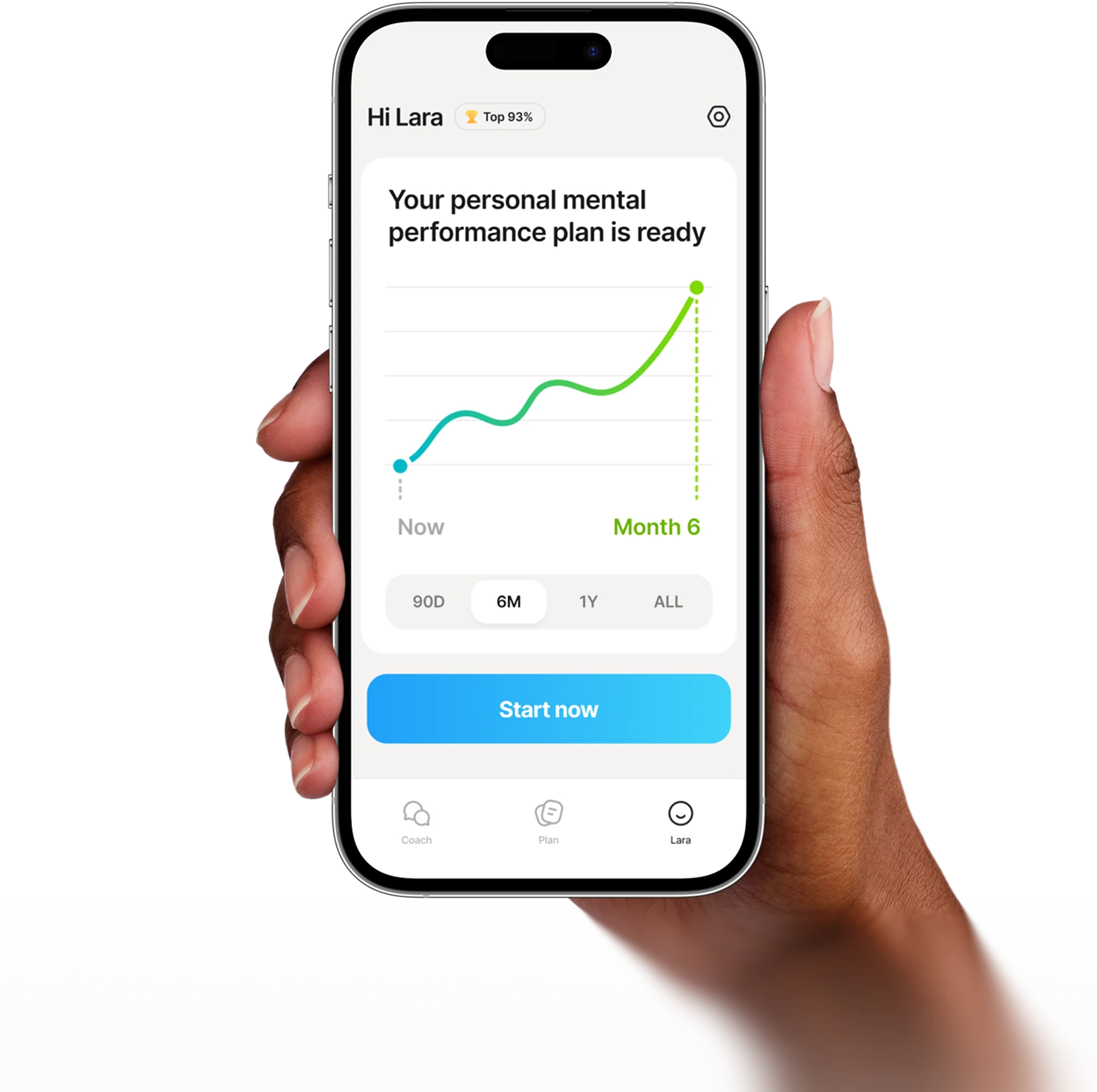
Equestrian sport is unique in that mental state affects performance through two channels simultaneously: the rider's own execution and the horse's response to the rider's physical and psychological tension. A nervous rider communicates anxiety through muscle tension, uneven aids, and inconsistent breathing — all of which the horse detects and responds to. This makes mental training not just performance-enhancing but essential. Sync provides riders with the techniques to manage their own psychology so they can bring out the best in their horse.
The quality of communication between horse and rider is determined as much by the rider's mental state as by their technical skill. Anxiety, frustration, or over-concentration all introduce noise into the aids that disrupts the horse's response. Sync teaches the mental composure techniques that create quiet, confident riding.
Competition arenas — with judges, crowds, and the pressure of results — create a psychological environment that many riders find significantly harder than training. The ability to replicate your best training performance in competition requires deliberate mental preparation that Sync provides through sport-specific sessions.
Show jumping and dressage require sustained, precisely directed attention across a complex sequence of technical demands. Losing focus at a single fence or movement can cost a clear round or a mark. Mental training builds the attentional stamina and task-switching precision to stay sharp across an entire course or test.
Develop the psychological composure that produces quiet, confident aids your horse can read clearly.
Replicate your training performance in competition by managing the added pressure of judges and crowds.
Mentally ride the course or test to perfection before entering the arena.
Reset immediately after a knocked pole or incorrect movement without letting it affect the rest of the round.
Build a mental warm-up routine for horse and rider that creates optimal readiness for the ring.
Maintain sharp, consistent mental performance across multiple classes on a long competition day.
Download Sync and tell us you ride. You can specify your discipline — show jumping, dressage, eventing, or endurance — so the app tailors its recommendations precisely to your situation and goals.
Sync builds you a structured plan based on your discipline, your current mental strengths and weaknesses, and the areas you most want to improve — whether that is arena nerves, course focus, rider-horse connection, or recovery after faults.
Each session takes 10–15 minutes and is designed to fit around your training schedule. Complete them at home, in the yard, or on the way to a show — and track your progress over time.
An extensive library of guided visualisations, focus exercises, and breathing techniques — all accessible on demand.
Whether you ride dressage, jump, or event — Sync adapts its plan individually to your discipline and competition level.
Expert-led lessons covering the core principles of sport psychology, self-regulation, and performance optimisation.
A growing community of athletes at every level who use Sync to strengthen their mental game and perform at their best.
One plan covers all riders in your academy or club. Every rider gets their own personalised mental training programme, tailored to their discipline and competition level.
Get full visibility into your riders' mental training. See completion rates, consistency, and progress — so you know exactly where to focus your support before a major competition.
Identify which riders need more mental support before high-pressure competitions. Use data-driven insights to strengthen your squad's mental performance and competition readiness.
What is mental training for equestrian athletes?
Mental training for equestrian athletes is a structured practice of psychological skills that improve performance in the arena. It includes techniques such as visualisation, arousal regulation, breathing-based composure, pre-class routines, and focus management. What makes equestrian mental training unique is that a rider's psychological state communicates directly to the horse through physical tension, breathing patterns, and the quality of the aids. Sync delivers these sessions in a guided, app-based format so any rider can train their mental game as consistently as they train their physical technique.
How does rider anxiety affect the horse?
Horses are prey animals with a highly developed sensitivity to the emotional and physical state of their rider. When a rider is anxious, their muscles tighten, their breathing becomes shallow and irregular, and their aids become inconsistent or tense — all of which the horse detects and interprets as a signal of threat or uncertainty. This causes the horse to become more tense, distracted, or resistant, creating a feedback loop where rider anxiety increases horse tension which increases rider anxiety. Mental training breaks this cycle by giving riders the tools to manage their own psychological state, which in turn creates a calmer, more confident environment for the horse.
Can mental training help with arena nerves?
Yes — arena anxiety is one of the most common challenges for equestrian athletes at every level, and it responds extremely well to mental training. The combination of judges, crowds, and the pressure of results creates a psychological environment very different from training at home. Techniques such as controlled breathing, pre-entry visualisation routines, and attentional focus strategies can significantly reduce the arousal spike that many riders experience on entering the competition arena. Sync includes dedicated composure sessions designed specifically for equestrian athletes that can be used in the warm-up before entering the ring.
What mental skills are most important for show jumpers?
For show jumpers, the most critical mental skills are course visualisation, recovery after faults, and approach composure at technical fences. Course walking and mental rehearsal before entering the ring allow riders to plan every line and distance before they sit on their horse — which reduces cognitive load in the ring and allows automatic execution of the plan. Recovery after a knocked pole is equally important: the ability to reset immediately and maintain commitment through the rest of the course prevents single errors from becoming multiple errors. Sync's show jumping sessions specifically address these scenarios with sport-adapted techniques.
Is mental training useful for dressage riders?
Mental training is particularly valuable for dressage riders because dressage demands sustained, precisely directed attention across a complex sequence of movements where the margin for error is extremely fine. Focus management — the ability to stay present with the current movement rather than anticipating the next or dwelling on the last — is a trainable skill that separates consistent dressage performers from inconsistent ones. Additionally, the collaborative nature of dressage, where horse and rider must appear effortlessly harmonious, means that visible tension or emotional responses to errors are directly penalised. Sync helps dressage riders develop the quiet confidence and absorbed focus that judges reward.
What does Sync cost?
Sync is free to start and you can keep training without paying. Premium unlocks the full library and costs around 100 euro a year, with monthly and six month options; the current prices are always shown in the app. Clubs get a discounted team licence, ask us for a quote. Sync Ultra combines the app with a monthly session with a certified sport psychologist for 100 euro a month.
Four minutes, 16 possible types. Each one has its own strengths and its own patterns under pressure.