Reset in the few seconds between rallies, keep your concentration over three games and stay calm on your serve when the score reaches 20:20, in singles and in doubles.
Badminton is fast. Rallies are often over within seconds, and every one of them ends in a point, so there is never a phase where a mistake does not count. Between rallies you have only a moment to let go of the last point, and a match over three games asks for concentration long after your legs have started to burn. In doubles you also share mistakes and moods with a partner. Composure, quick resets and focus over the full distance are mental skills, and you can train them like your footwork.
Every rally brings a point, and the next one starts almost straight away. There is no time to brood. A short reset you do the same way every time, a breath, a look at your strings, a fixed word, clears the last point before the next serve. Sync teaches you to build this routine until it runs on its own.
A close first game, a lost second, and then it all comes down to the third. Especially when you get tired, your attention drifts to the score, to the mistake from two rallies ago or to the result. Sync trains focus techniques that bring you back to the next shuttle, so you are still wide awake in the third game.
In singles you cover the whole court alone and carry every point yourself. In doubles you share it with your partner, and with it the mistakes, the rotation and the calls. Both need their own mental tools, and on tournament days with several matches you often need both on the same day. Sync adapts its plan to your sport and your level.
A quick, consistent reset after every rally, so one mistake does not turn into a run of lost points.
A fixed routine before every serve, so your short serve is as clean at 20:20 as it is at 3:1.
Stay sharp from the first point to the last, even when your legs get heavy in the third game.
Let go of a missed smash or a serve into the net quickly and go into the next rally with full intent.
Stay loose at 19:19 and 20:20, decide clearly and play your shots instead of just pushing the shuttle back.
Clear calls, calm words and body language between rallies that keep you and your partner working as one.
Download Sync and tell us you play badminton. You can specify your level so the app tailors its plan to your situation and goals.
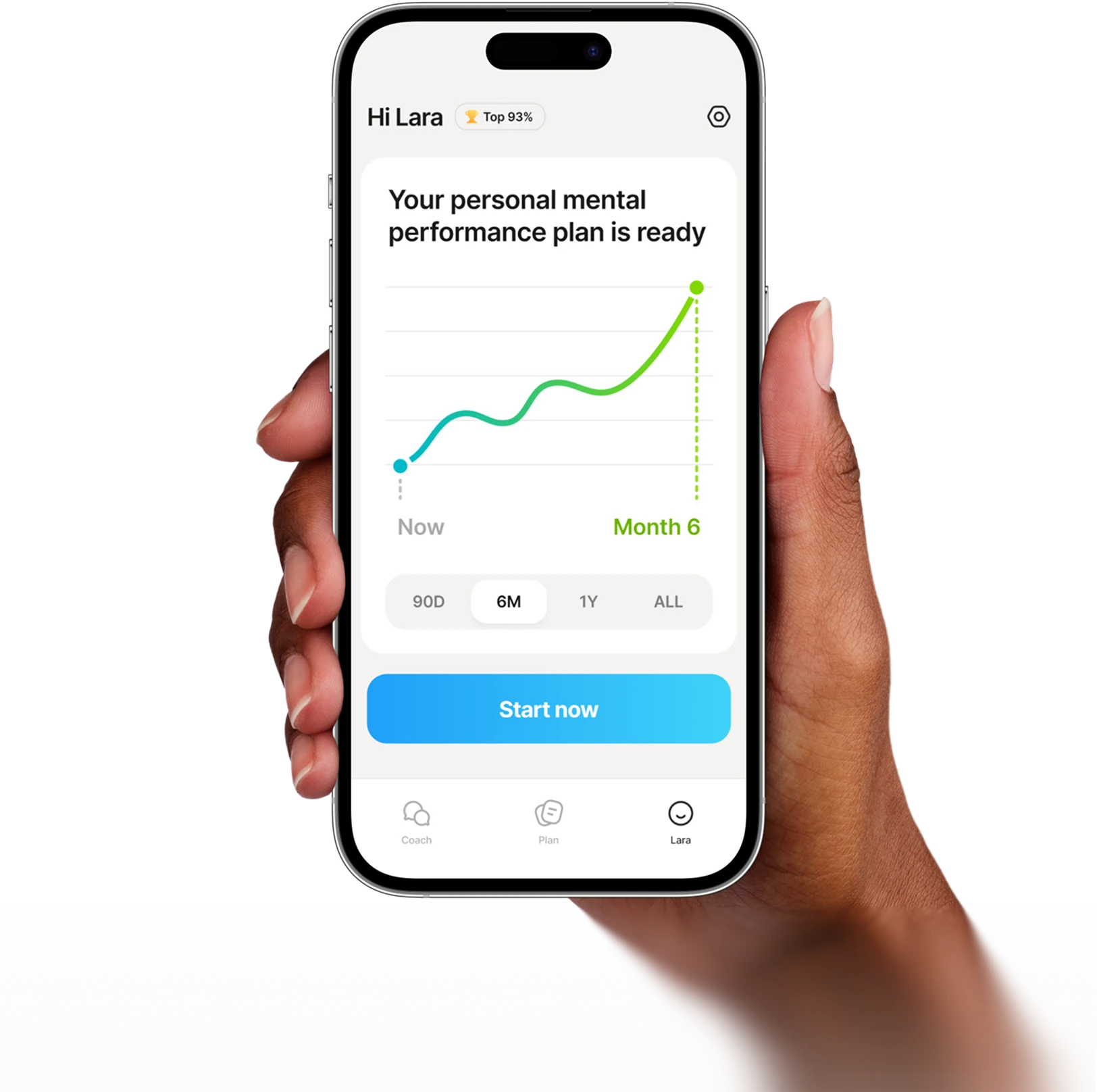
Sync builds you a structured plan based on your sport, your current mental strengths and weaknesses and the areas you most want to improve, whether that is resetting between rallies, composure in close games or concentration over three games.
Each session takes 10 to 15 minutes and fits around your training. Do it at home, in the sports hall or on the way to a tournament, and track your progress over time.
An extensive library of guided visualisations, focus exercises and breathing techniques, all accessible on demand.
Whether you play badminton, tennis, table tennis or a team sport, Sync adapts its plan individually to your sport and level.
Expert-led lessons covering the core principles of sport psychology, self-regulation and performance optimisation.
A growing community of athletes at every level who use Sync to strengthen their mental game and perform at their best.
One plan covers your whole club. Every player gets their own personalised mental training programme, tailored to badminton and their level of competition.
Get full visibility into your players' mental training. See completion rates, consistency and progress, so you know where to focus your support before a big tournament or league match.
Identify which players need more mental support before high-pressure matches and put your coaching time where it has the most impact.
What is mental training for badminton?
Mental training for badminton is a structured practice of psychological skills that improve how you play under pressure. Because rallies are short and every rally ends in a point, it focuses on resetting quickly between rallies, keeping your serve routine stable in close scores, recovering from mistakes and holding your concentration over three games. In doubles it also covers communication with your partner. Sync delivers these skills in short guided sessions that you can do whenever it suits you.
How do I reset in the few seconds between rallies?
The time between two rallies is short, so your reset has to be short too. What works is a fixed sequence after every rally, won or lost: one physical action, for example a look at your strings, one calm breath out and one word that points to the next rally rather than the last. Because you do it every time, it is still there when you are nervous. Sync helps you build this routine and practise it until it runs automatically.
How do I stay focused over three games?
Concentration rarely breaks all at once. It drifts: to the score, to an earlier mistake or to how tired your legs feel. The skill is to notice the drift and come back, not to never drift at all. Short attention anchors help, for example a fixed cue word before every serve and return, and the intervals at 11 points and between games are good moments for a deliberate reset with one breath and one simple plan for the next phase. Sync trains these focus techniques in short daily sessions.
What helps with nerves at 20:20?
In a close finish your technique is the same as in the first rally, but your heart rate, muscle tension and fear of the mistake are not. That is when the short serve floats too high or the smash ends up in the net. Three things help: a breathing technique with a long exhale, the same routine before every serve whatever the score, and attention on what you want to do rather than on what you want to avoid. Visualisation lets you rehearse these finishes off court, so they feel familiar when they come.
Does mental training work for singles and doubles?
Yes. The basics are the same: reset, focus and composure under pressure. The emphasis shifts. In singles you carry every point alone, so self talk and handling your own mistakes matter most. In doubles a mistake also affects your partner, so a short agreed gesture between rallies and calm body language help. Sync is designed for athletes from age 14 upwards at any level, and on many tournament days you play both anyway.
What does Sync cost?
Sync is free to start and you can keep training without paying. Premium unlocks the full library and costs around 100 euro a year, with monthly and six month options; the current prices are always shown in the app. Clubs get a discounted team licence, ask us for a quote. Sync Ultra combines the app with a monthly session with a certified sport psychologist for 100 euro a month.
Four minutes, 16 possible types. Each one has its own strengths and its own patterns under pressure.