
Forget the last play before the next snap, stay composed on fourth down and execute your assignment when the game is on the line.
American football is a series of short, intense explosions with long pauses in between. That leaves time to replay a dropped pass, a missed tackle or a bad call. The players who perform consistently are the ones who arrive at the next snap with a clear head and their own job in mind.
A blown coverage or a fumble is a matter of seconds, but the thought can stay for a whole drive. Between plays you have just enough time to reset. Sync trains a short routine that closes the last play and opens the next one.
Eleven players, one job each. When pressure rises, players often try to do too much and leave their own job undone. Focus exercises help you keep your attention on your assignment, your read and your first step.
Fourth down, two minute drill, a field goal to win it. Your pulse rises and the noise increases. Breathing techniques and a fixed pre snap routine keep your thinking clear when the game is on the line.
A short routine between plays, the same after a touchdown and after a turnover.
Trust the play and do your own job on every snap.
One breath and one cue to arrive calm and ready at the line.
Clear, calm words that keep the unit together when things go badly.
Bring full intensity without losing your head or drawing the flag.
Run through plays and reads in your head before you step on the field.
Download Sync and tell us you play American football. You can specify your level so the app tailors its plan to your situation and goals.
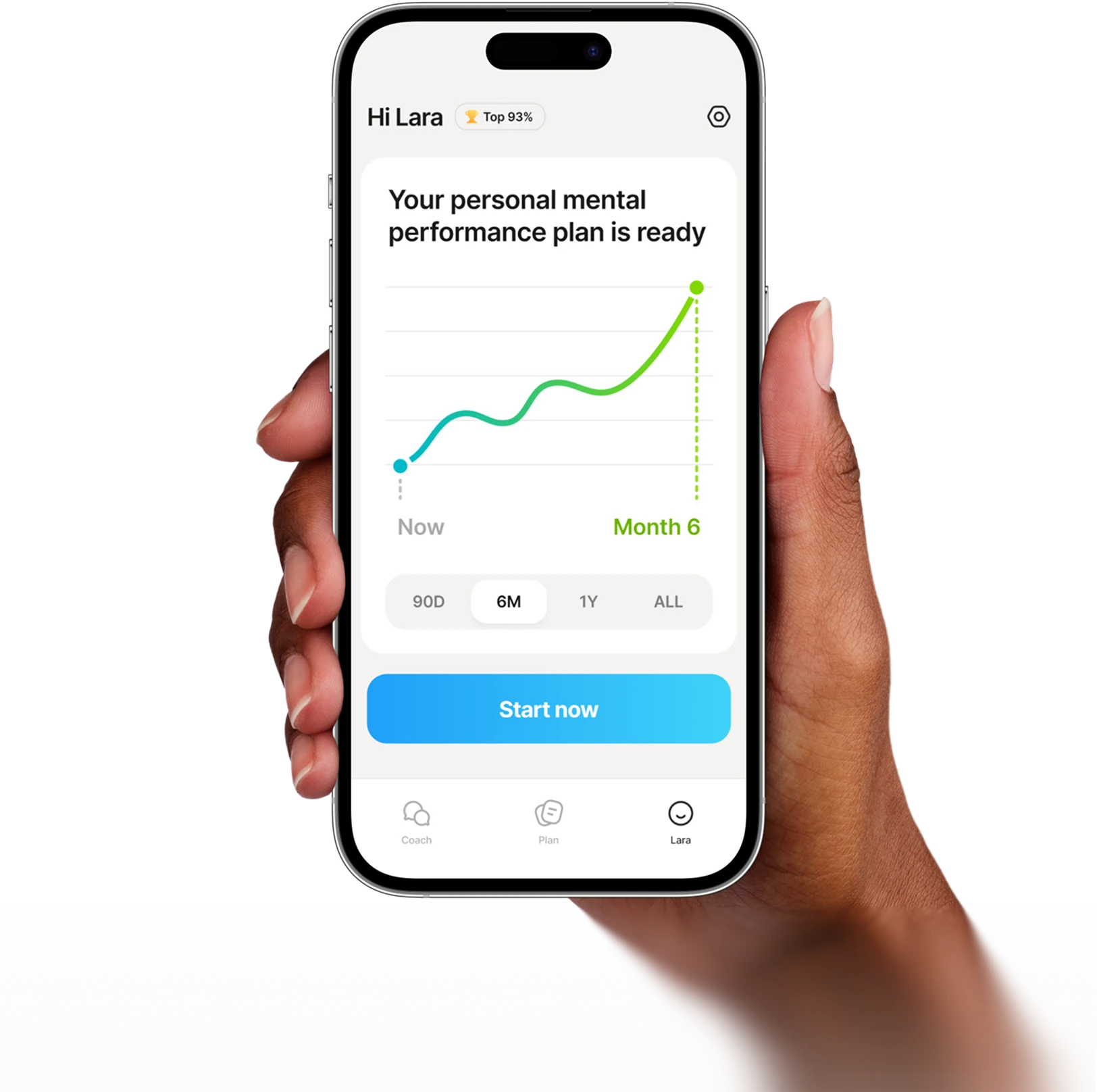
Sync builds you a structured plan based on your sport, your current mental strengths and weaknesses and the areas you most want to improve, whether that is resetting between plays, assignment focus or composure late in the game.
Each session takes 10 to 15 minutes and fits around your training. Do it at home, at the field or on the way to a game, and track your progress over time.
An extensive library of guided visualisations, focus exercises and breathing techniques, all accessible on demand.
Whether you play American football, soccer or handball, Sync adapts its plan individually to your sport and level.
Expert-led lessons covering the core principles of sport psychology, self-regulation and performance optimisation.
A growing community of athletes at every level who use Sync to strengthen their mental game and perform at their best.
One plan covers your whole team. Every player gets their own personalised mental training programme, tailored to American football and their level of competition.
Get full visibility into your players' mental training. See completion rates, consistency and progress, so you know where to focus your support before a big game.
Identify which players need more mental support before big games and put your coaching time where it has the most impact.
What is mental training for American football?
Mental training for American football is a structured practice of psychological skills that improve how you play under pressure. It means three things above all: closing the last play quickly, staying with your own assignment and keeping a clear head in the decisive drives. Sync delivers these skills in short guided sessions that you can do whenever it suits you.
How do I forget a bad play?
You will not forget it, you just move it to a later time. Use a short physical signal between plays, such as a breath and clapping your hands, and then ask only one question: what is my job on this snap? The film session is the place for analysing the mistake. During the game the next play has priority.
How do I stay calm on the big plays?
A big play asks for the same movement as any other, only the meaning changes. Use your normal routine at the line instead of a special one. Breathe out long once and pick one cue, such as your first step. If you visualise these situations during the week, they feel less new on game day.
How do I stay aggressive without losing control?
Intensity helps you as long as it is directed at your job. Penalties usually come from frustration, for example after a hit or a call you did not like. Decide beforehand what you do at that moment: walk away, breathe, back to the huddle. A short word with a teammate also helps. You keep the energy, but you decide where it goes.
Is mental training useful for amateur players?
Yes, perhaps even more than for professionals, because amateur players rarely have access to a sport psychologist. The moments that decide a game are the same at every level: a fumble, a fourth down call, the drive after a turnover. Sync is designed for athletes from age 14 upwards at any level and brings established sport psychology techniques into short daily sessions that fit around your training and your games.
What does Sync cost?
Sync is free to start and you can keep training without paying. Premium unlocks the full library and costs around 100 euro a year, with monthly and six month options; the current prices are always shown in the app. Clubs get a discounted team licence, ask us for a quote. Sync Ultra combines the app with a monthly session with a certified sport psychologist for 100 euro a month.
Four minutes, 16 possible types. Each one has its own strengths and its own patterns under pressure.


