
Stay calm in the chaos of the swim start, keep your head clear through the transitions and hold on to your race plan when the run starts to hurt.
A triathlon gives you hours to think, and not all of those thoughts help. You move from a crowded swim to a long, lonely ride and then to a run on tired legs. Your body has trained for this. Your head decides whether you pace the day you planned or the one your nerves want.
Contact, cold water and a racing pulse can throw you off in the first minutes. A long exhale and one simple cue, such as your next stroke, bring you back to your rhythm. Sync trains this calm on land, so it is there when the start goes off.
Fresh legs and fast riders around you tempt you to overpace. The price comes later on the run. Staying with your own plan is a mental skill: Sync helps you notice the urge and let it pass.
Almost every long race has a stretch where everything says stop. Athletes who have rehearsed this moment recognise it instead of fearing it. Self talk and splitting the distance into small sections get you through.
Breathing and routines that settle your pulse before and during the swim start.
Race your own pacing and nutrition plan, whatever the athletes around you are doing.
A fixed mental sequence for T1 and T2, so you switch discipline without rushing or forgetting.
Short, practised phrases that replace the voice telling you to slow down.
A flat tyre or a bad swim is one moment of the day. Learn to let it go and race the rest.
Rehearse the course, the transitions and the hard stretches before race day.
Download Sync and tell us you race triathlon. You can specify your level so the app tailors its plan to your situation and goals.
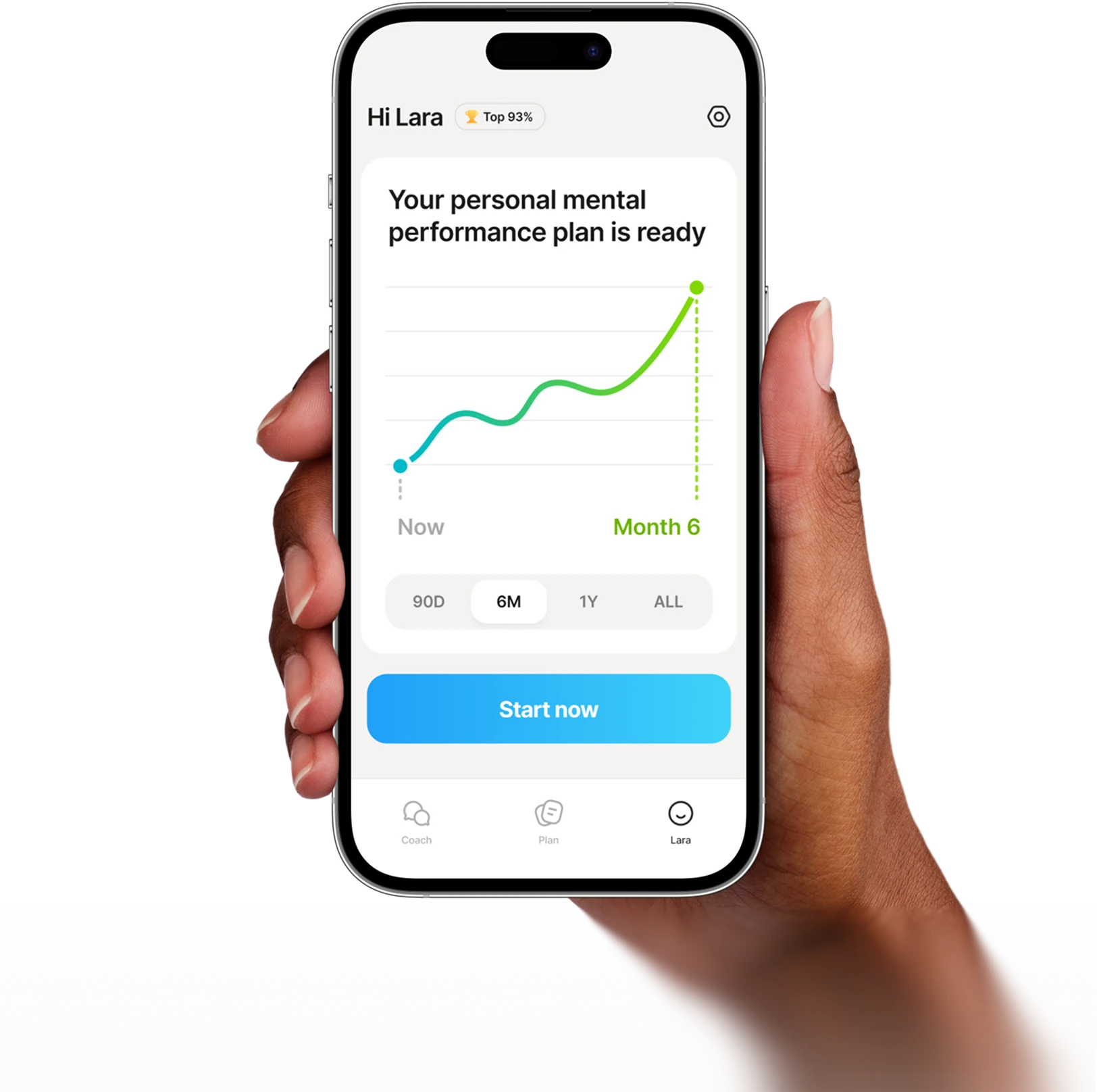
Sync builds you a structured plan based on your sport, your current mental strengths and weaknesses and the areas you most want to improve, whether that is calm at the swim start, pacing discipline or staying strong on the run.
Each session takes 10 to 15 minutes and fits around your training. Do it at home, on the turbo trainer or on the way to a race, and track your progress over time.
An extensive library of guided visualisations, focus exercises and breathing techniques, all accessible on demand.
Whether you race triathlon, ride or run, Sync adapts its plan individually to your sport and level.
Expert-led lessons covering the core principles of sport psychology, self-regulation and performance optimisation.
A growing community of athletes at every level who use Sync to strengthen their mental game and perform at their best.
One plan covers your whole club. Every athlete gets their own personalised mental training programme, tailored to triathlon and their level of competition.
Get full visibility into your athletes' mental training. See completion rates, consistency and progress, so you know where to focus your support before a key race.
Identify which athletes need more mental support before big races and put your coaching time where it has the most impact.
What is mental training for triathlon?
Mental training for triathlon is a structured practice of psychological skills that improve how you race under load. It means three things above all: staying calm at the swim start, sticking to your pacing plan while others pass you, and getting through the hard stretches of the run. Sync delivers these skills in short guided sessions that you can do whenever it suits you.
How do I stay calm at the swim start?
Panic in the water usually starts with breathing. Start further out or further back if contact unsettles you, breathe out long and fully, and give your attention one job: the next stroke. Practise this exhale on land until it runs by itself. Visualising the start beforehand also helps, because the crowd and the cold then feel familiar rather than new.
How do I stop overpacing on the bike?
Overpacing is rarely a lack of knowledge, you know your numbers. It happens because other riders pass you and your race nerves read that as falling behind. Decide before the race what you will do at that moment, for example check your plan and repeat one cue. Then passing riders become information you have already answered, not a call to act.
What helps when I want to give up on the run?
Stop looking at the whole distance. Split it into sections you can picture, such as the next aid station, and only race that one. Use a short phrase you have practised, not a new one on the day. Check the basics too, because low energy often feels like a mental problem. Sync trains self talk and focus in advance, so you have them ready when it gets hard.
Is mental training useful for age group athletes?
Yes, perhaps even more than for professionals, because age group athletes rarely have access to a sport psychologist. The moments that decide a race are the same at every level: a rough swim start, a pace that feels too easy to believe, a hard stretch on the run. Sync is designed for athletes from age 14 upwards at any level and brings established sport psychology techniques into short daily sessions that fit around your training and your races.
What does Sync cost?
Sync is free to start and you can keep training without paying. Premium unlocks the full library and costs around 100 euro a year, with monthly and six month options; the current prices are always shown in the app. Clubs get a discounted team licence, ask us for a quote. Sync Ultra combines the app with a monthly session with a certified sport psychologist for 100 euro a month.
Four minutes, 16 possible types. Each one has its own strengths and its own patterns under pressure.


