
Stay composed when a workout falls apart, come back from a failed lift and stop measuring every session against the names on the whiteboard.
Crossfit puts heavy lifts, gymnastics and hard conditioning into one workout, often with people watching and a score at the end. That makes it a test of how you think when you are out of breath. Staying with your plan, trying the next rep and handling a no rep are skills you can train.
A missed snatch or a no rep costs you more than one rep if you carry it with you. A short routine, a breath and one technical cue bring you back to the bar. Sync trains this reset until it runs without thinking.
The workout was announced minutes ago and the clock is running. Going out at everyone else's speed is tempting and expensive. Knowing what you will do when the burn arrives helps you stay in the workout from start to finish.
Comparison keeps you motivated until it starts to wear you down. When every session becomes a verdict, training stops being fun and confidence depends on the score. Sync helps you look at your own progress and what you control.
Leave a failed lift or a no rep behind before you go back to the bar.
Choose your own speed while the box and the clock pull you forward.
Break long sets into pieces and only deal with the next one.
Short, practised phrases for the moment you want to put the bar down.
Approach a heavy lift with a routine rather than with doubts.
Use the whiteboard as information and measure yourself against yourself.
Download Sync and tell us you do Crossfit. You can specify your level so the app tailors its plan to your situation and goals.
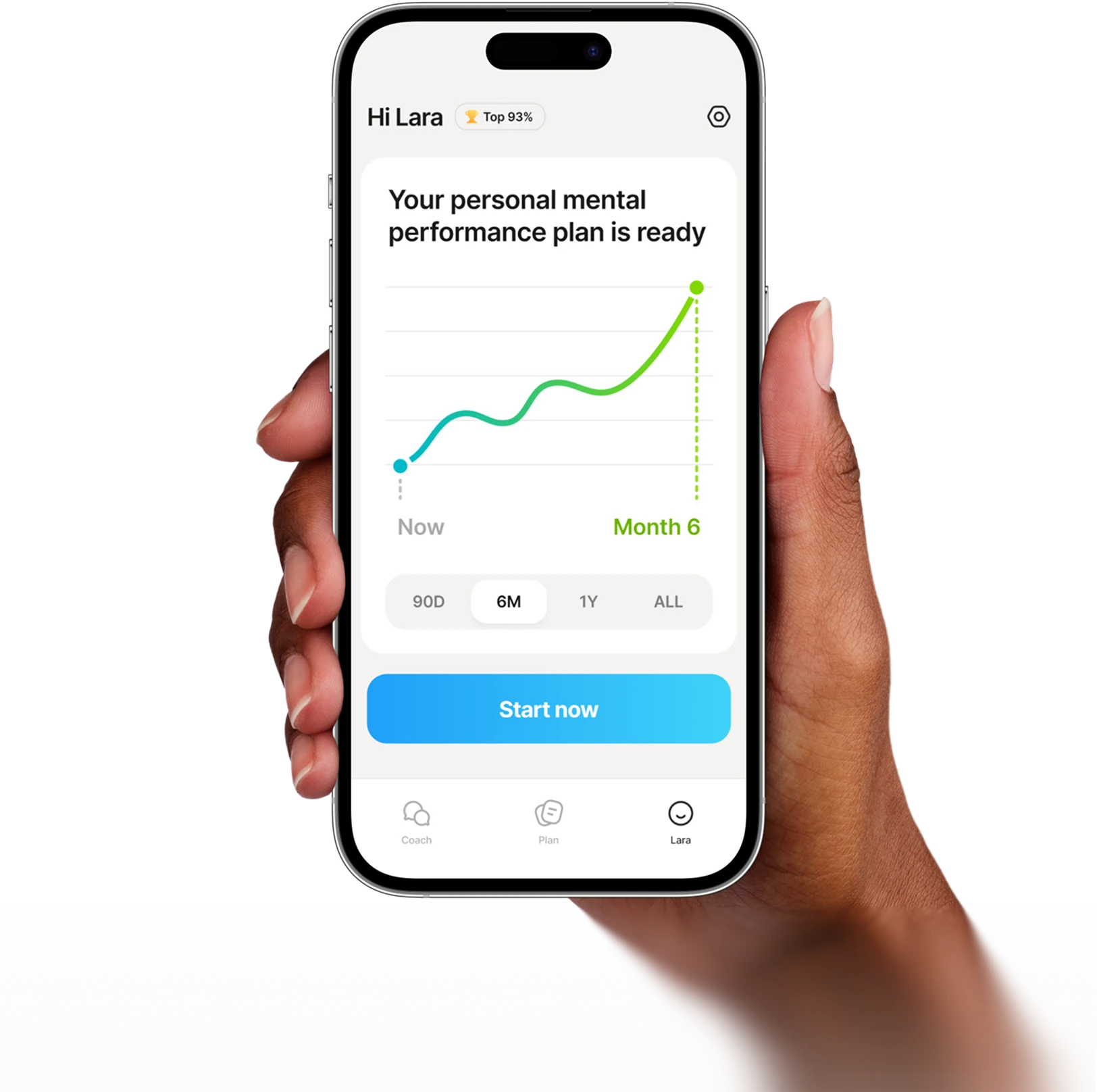
Sync builds you a structured plan based on your sport, your current mental strengths and weaknesses and the areas you most want to improve, whether that is resetting after a miss, pacing or confidence under the bar.
Each session takes 10 to 15 minutes and fits around your training. Do it at home, in the box or on the way to a competition, and track your progress over time.
An extensive library of guided visualisations, focus exercises and breathing techniques, all accessible on demand.
Whether you do Crossfit, race Hyrox or lift, Sync adapts its plan individually to your sport and level.
Expert-led lessons covering the core principles of sport psychology, self-regulation and performance optimisation.
A growing community of athletes at every level who use Sync to strengthen their mental game and perform at their best.
One plan covers your whole box. Every athlete gets their own personalised mental training programme, tailored to Crossfit and their level of competition.
Get full visibility into your athletes' mental training. See completion rates, consistency and progress, so you know where to focus your support before a competition.
Identify which athletes need more mental support before competitions and put your coaching time where it has the most impact.
What is mental training for Crossfit?
Mental training for Crossfit is a structured practice of psychological skills that improve how you perform when you are out of breath and under load. It means three things above all: moving on quickly after a miss or a no rep, pacing workouts instead of following everyone else, and approaching heavy lifts with a routine. Sync delivers these skills in short guided sessions that you can do whenever it suits you.
What helps when I fail a lift in a workout?
A failed lift hurts most in the seconds after it, when your head starts explaining what it means. Give those seconds a fixed job: step back, take a long breath, pick one technical cue and go again. Keep the cue simple, such as staying over the bar. This routine works best when it is rehearsed in training, not invented during the competition.
How do I stop comparing myself with others in the box?
You will not stop noticing the whiteboard, and you do not have to. Decide what it is for: information about the workout, not a judgement of you. Keep track of your own numbers and choose one or two things before each session that you want to do well, independent of the result. Your confidence then rests on things you control.
What helps with nerves at a competition?
Under pressure heart rate and tension rise, which is why warmup weights can feel strange. A breathing technique with a long exhale calms your body within a few breaths. A fixed routine before each workout gives your head something to do, and one clear goal for the first minutes stops you from starting too fast. Visualising the workout beforehand makes it feel familiar.
Is mental training useful for recreational athletes?
Yes, perhaps even more than for professionals, because recreational athletes rarely have access to a sport psychologist. The moments that decide a workout are the same at every level: a failed lift, a pace that was too high, the rep you are not sure you can make. Sync is designed for athletes from age 14 upwards at any level and brings established sport psychology techniques into short daily sessions that fit around your training and your workouts.
What does Sync cost?
Sync is free to start and you can keep training without paying. Premium unlocks the full library and costs around 100 euro a year, with monthly and six month options; the current prices are always shown in the app. Clubs get a discounted team licence, ask us for a quote. Sync Ultra combines the app with a monthly session with a certified sport psychologist for 100 euro a month.
Four minutes, 16 possible types. Each one has its own strengths and its own patterns under pressure.


