
Stay with the effort on long climbs, ride the bunch with a clear head and get your confidence back on the descents after a crash.
Cycling asks you to accept discomfort for hours and still make good decisions at speed. When to follow an attack, when to hold your own pace, where to sit in the bunch. Those decisions get worse as you tire, unless you have trained them.
On a long climb or in a time trial nobody else can share the load. What you say to yourself matters when the numbers stop being fun. Sync trains focus and self talk, so the effort stays a task instead of becoming a threat.
A crash stays in the head long after the skin has healed. You brake earlier, sit further back and tense up in corners. Gradual visualisation and small, repeated successes help rebuild trust in yourself and the bike.
Follow or wait, attack or save it? In the bunch you decide in seconds with a high pulse. Riders who stay calm read the race better. Breathing techniques and a clear plan keep your thinking working when it counts.
Keep your attention on cadence, breathing and the next section rather than the distance left.
Short, practised phrases for the moment your legs start asking questions.
Rebuild confidence in corners and in the bunch, step by step.
Stay calm enough to choose which moves to follow and which to let go.
Let go of a missed break, a puncture or a bad day and ride what is still possible.
Ride the key climb or the finale in your head before you do it for real.
Download Sync and tell us you ride. You can specify your level so the app tailors its plan to your situation and goals.
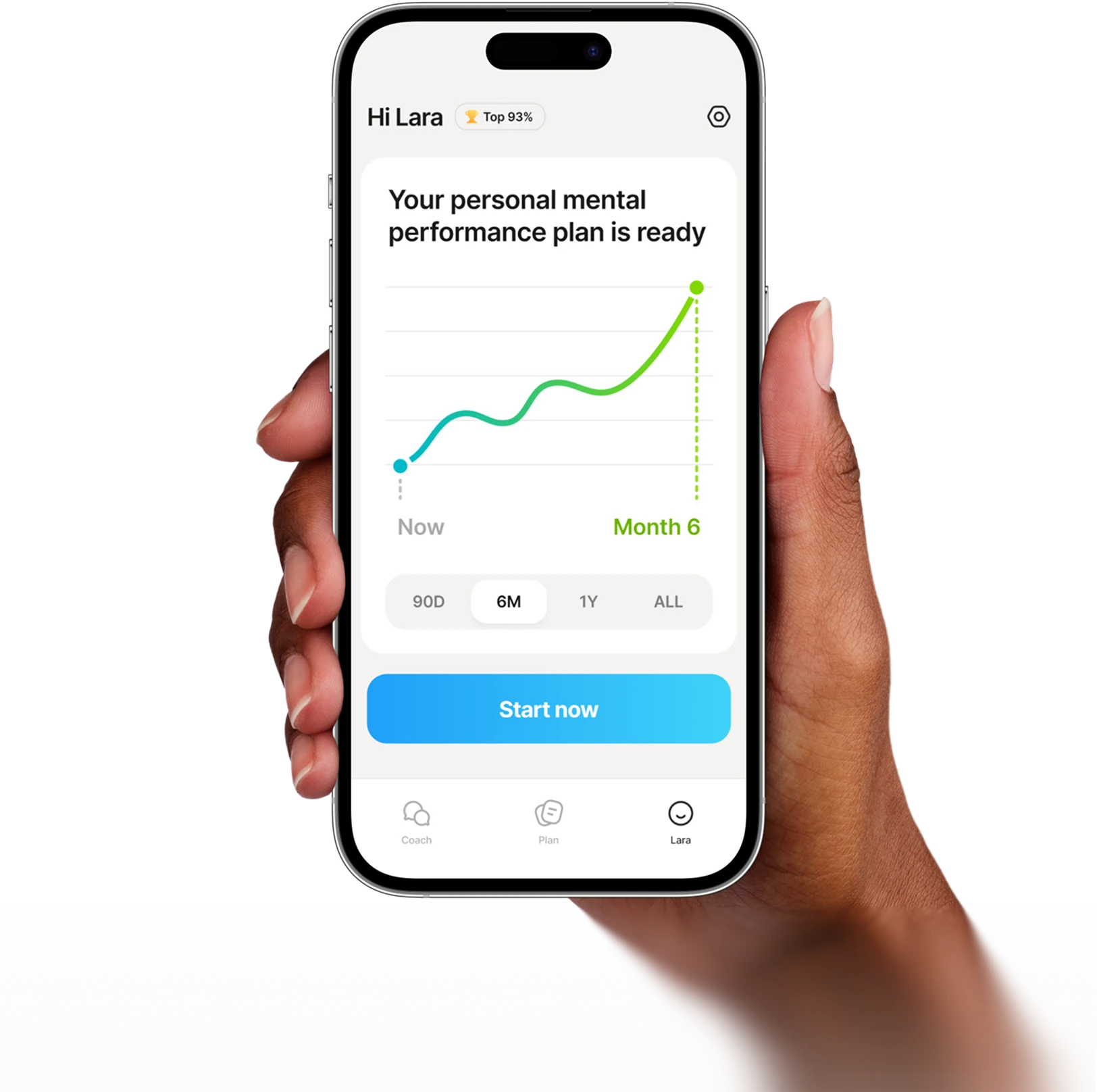
Sync builds you a structured plan based on your sport, your current mental strengths and weaknesses and the areas you most want to improve, whether that is staying in the effort, confidence on descents or decisions in the bunch.
Each session takes 10 to 15 minutes and fits around your training. Do it at home, on the turbo trainer or on the way to a race, and track your progress over time.
An extensive library of guided visualisations, focus exercises and breathing techniques, all accessible on demand.
Whether you ride, run or race triathlon, Sync adapts its plan individually to your sport and level.
Expert-led lessons covering the core principles of sport psychology, self-regulation and performance optimisation.
A growing community of athletes at every level who use Sync to strengthen their mental game and perform at their best.
One plan covers your whole team. Every rider gets their own personalised mental training programme, tailored to cycling and their level of competition.
Get full visibility into your riders' mental training. See completion rates, consistency and progress, so you know where to focus your support before a key race.
Identify which riders need more mental support before big races and put your coaching time where it has the most impact.
What is mental training for cycling?
Mental training for cycling is a structured practice of psychological skills that improve how you ride under load. It means three things above all: staying in the effort when it hurts, making clear decisions at a high pulse, and trusting yourself in corners and in the bunch. Sync delivers these skills in short guided sessions that you can do whenever it suits you.
How do I get through a hard climb mentally?
Stop riding the whole climb in your head. Split it into pieces you can see, the next bend or the next minute, and only deal with that one. Bring your attention to something you control, such as breathing or cadence, and use one short phrase you have practised. The discomfort does not disappear, but it stops being a verdict on how the day is going.
How do I get my confidence back after a crash?
Go step by step instead of testing yourself on the first fast descent. Start with corners and speeds that feel safe, and add a little each time. Visualise clean lines before you ride them, and notice each one that went well. If the fear stays strong or shows up off the bike, talking to a sport psychologist is a good next step.
What helps with nerves before a race?
Nerves show that the race matters to you, they only become a problem when they take over. A breathing technique with a long exhale calms your body within a few breaths. A fixed routine for the last hour before the start gives your head something to do. Set one or two goals you control, such as your position before the climb, instead of a result you do not.
Is mental training useful for club and hobby riders?
Yes, perhaps even more than for professionals, because club and hobby riders rarely have access to a sport psychologist. The moments that decide a race are the same at every level: the next climb, a move you hesitate to follow, a corner you no longer trust. Sync is designed for athletes from age 14 upwards at any level and brings established sport psychology techniques into short daily sessions that fit around your training and your rides.
What does Sync cost?
Sync is free to start and you can keep training without paying. Premium unlocks the full library and costs around 100 euro a year, with monthly and six month options; the current prices are always shown in the app. Clubs get a discounted team licence, ask us for a quote. Sync Ultra combines the app with a monthly session with a certified sport psychologist for 100 euro a month.
Four minutes, 16 possible types. Each one has its own strengths and its own patterns under pressure.


