
Deal with your fear of falling, keep breathing on the crux and bring your project or your competition home with a clear head.
Climbing is one of the most honest sports for your head. The fear of falling, the doubt before the crux and the pressure of a project you have tried many times all show up in your body as stiff arms and a shallow breath. Strength alone will not fix that. Training how you deal with those moments will.
Fear of falling makes you grip too hard, climb too slowly and stop before you have to. It is common at all levels, and it is trainable. Together with planned practice falls with your partner, Sync helps you calm your body and make clear decisions on the wall.
Many climbers hold their breath at exactly the point where they need the most oxygen and calm. Conscious breathing at rests and before hard moves keeps your arms looser and your head clearer. Sync makes it a habit in short sessions.
After the tenth attempt, the project starts to be about you rather than the moves. In competition, you have limited time and an audience. Focusing on the next move and using a clear routine keep your attention where the climbing happens.
Understand the fear of falling and take small steps to get past it.
Breathe deliberately at rests and before hard moves.
Stay with this hold rather than with the top or who is watching.
Climb your beta in your head before you leave the ground.
Let go of the last attempt and start the next one fresh.
Stay motivated through many attempts without judging yourself.
Download Sync and tell us you climb. You can specify your level so the app tailors its plan to your situation and goals.
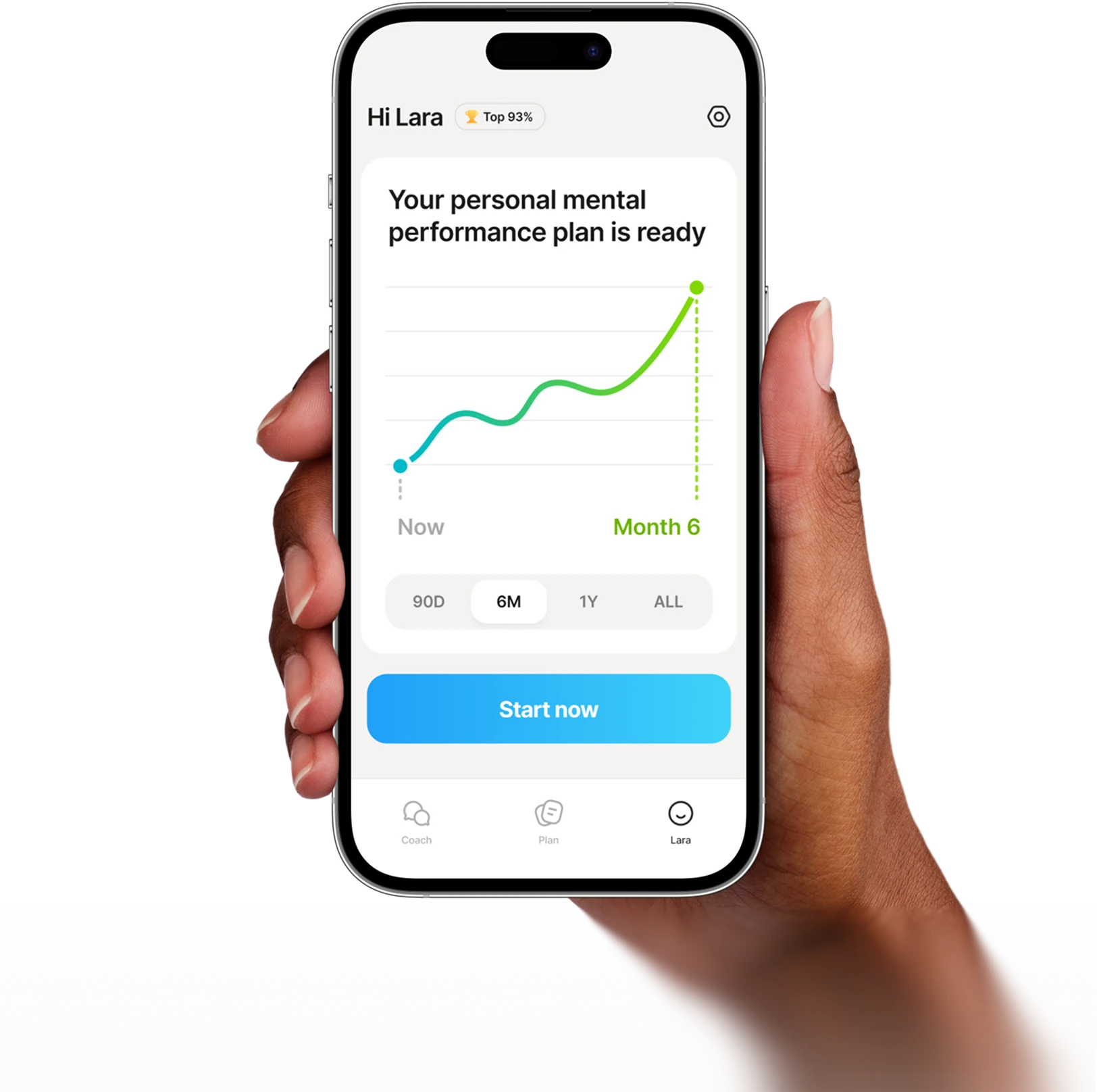
Sync builds you a structured plan based on your sport, your current mental strengths and weaknesses and the areas you most want to improve, whether that is fear of falling, focus on the crux or nerves in competition.
Each session takes 10 to 15 minutes and fits around your training. Do it at home, at the wall or on the way to the crag, and track your progress over time.
An extensive library of guided visualisations, focus exercises and breathing techniques, all accessible on demand.
Whether you boulder, sport climb or do something else entirely, Sync adapts its plan individually to your sport and level.
Expert-led lessons covering the core principles of sport psychology, self-regulation and performance optimisation.
A growing community of athletes at every level who use Sync to strengthen their mental game and perform at their best.
One plan covers your whole club. Every climber gets their own personalised mental training programme, tailored to climbing and their level of competition.
Get full visibility into your climbers' mental training. See completion rates, consistency and progress, so you know where to focus your support before a competition.
Identify which climbers need more mental support before competitions and put your coaching time where it has the most impact.
What is mental training for climbing?
Mental training for climbing is a structured practice of psychological skills that help you climb freely when it counts. It means three things above all: dealing with the fear of falling, staying calm and breathing on hard moves, and keeping your focus on the next move on projects and in competition. Sync delivers these skills in short guided sessions that you can do whenever it suits you.
How do I get over my fear of falling?
Go in small, planned steps and do it with a belayer you trust and only where a fall is safe. Start with short falls and increase slowly. Your head learns from experience, so repeat this regularly rather than once. On the wall, breathe out long before the move and focus on what you are doing, not what could happen. If the fear comes from a bad accident, consider talking to a sport psychologist.
What helps when I freeze on the crux?
Freezing usually starts with holding your breath and looking down. Plan your rests and sequences beforehand, and breathe deliberately at the last rest. Pick one word for the hard move, such as push or hips. Then commit to the move, because hesitating halfway costs more strength than most falls. Visualising the sequence on the ground makes it more automatic on the wall.
How do I deal with nerves in a competition?
You have limited time and limited information, which is unusual compared to the wall at home. Use a fixed routine for isolation and for the time before each boulder or route. A breathing technique with a long exhale calms your body. Judge yourself by how you climbed, not by your ranking, because you cannot control how the others do.
Is mental training useful for hobby climbers?
Yes, perhaps even more than for professionals, because hobby climbers rarely have access to a sport psychologist. The moments that decide a climb are the same at every level: a clip above the last bolt, the crux on the tenth attempt, a boulder with people watching. Sync is designed for athletes from age 14 upwards at any level and brings established sport psychology techniques into short daily sessions that fit around your training and your climbing.
What does Sync cost?
Sync is free to start and you can keep training without paying. Premium unlocks the full library and costs around 100 euro a year, with monthly and six month options; the current prices are always shown in the app. Clubs get a discounted team licence, ask us for a quote. Sync Ultra combines the app with a monthly session with a certified sport psychologist for 100 euro a month.
Four minutes, 16 possible types. Each one has its own strengths and its own patterns under pressure.


