
Reset between rallies, keep your cool after a let decision you disagree with and keep thinking clearly at 9 all when your legs are burning.
Squash is intense in a way few racket sports are. You are close to your opponent, the rallies are physically draining, and the breaks are short. On top of that come tight calls, blocked paths and a tin that punishes every rushed shot. Keeping your head in that box is a skill you can train.
You only have seconds between rallies, and a tin at a bad moment will still be with you on the next serve. A short routine on the way back to the service box brings your pulse down and your head back to the next point. Sync trains this until it is automatic.
A let you thought was a stroke, an opponent standing in your way. In such a confined space it is easy to get annoyed, and that affects your next rally. Accept the decision, breathe out and return to your plan. Those who argue longest usually lose the next point as well.
When your legs are burning, your shot choice gets worse. You go for the winner too early because you want the rally to end. Learning to recognise that urge lets you keep hitting length until the right ball comes.
A short routine after every rally, the same after winners and after mistakes.
Accept lets, strokes and traffic quickly and get on with the next rally.
Keep playing length and wait for the right ball, also when you are tired.
Let a tin go before it turns into a run of lost points.
Stay loose at 9 all and in a tie break and keep making your normal choices.
A fixed routine in the service box that calms your pulse before each point.
Download Sync and tell us you play squash. You can specify your level so the app tailors its plan to your situation and goals.
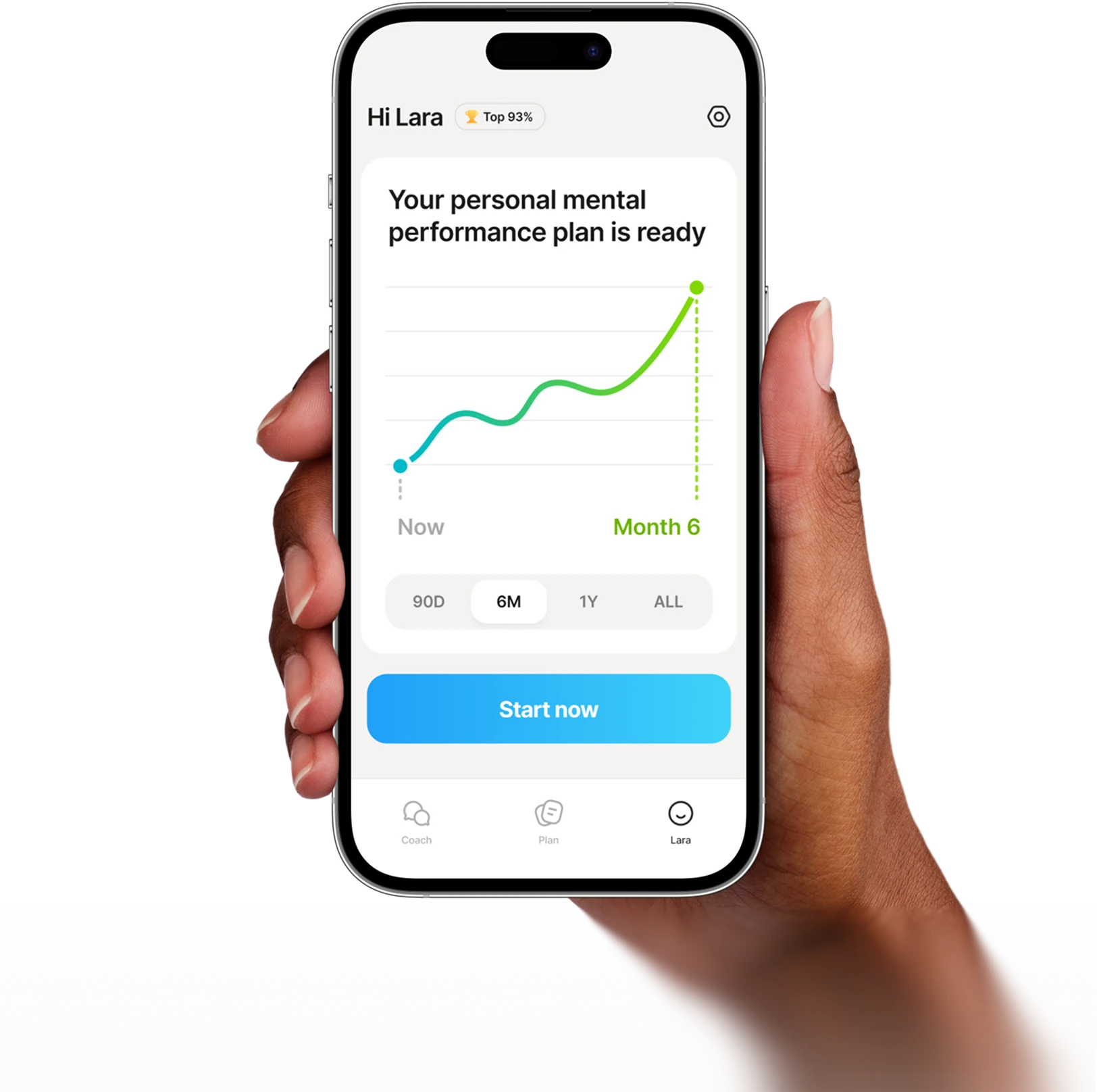
Sync builds you a structured plan based on your sport, your current mental strengths and weaknesses and the areas you most want to improve, whether that is resetting between rallies, handling decisions or composure at tight scores.
Each session takes 10 to 15 minutes and fits around your training. Do it at home, at the club or on the way to a match, and track your progress over time.
An extensive library of guided visualisations, focus exercises and breathing techniques, all accessible on demand.
Whether you play squash, tennis or badminton, Sync adapts its plan individually to your sport and level.
Expert-led lessons covering the core principles of sport psychology, self-regulation and performance optimisation.
A growing community of athletes at every level who use Sync to strengthen their mental game and perform at their best.
One plan covers your whole club. Every player gets their own personalised mental training programme, tailored to squash and their level of competition.
Get full visibility into your players' mental training. See completion rates, consistency and progress, so you know where to focus your support before a big tournament.
Identify which players need more mental support before high-pressure matches and put your coaching time where it has the most impact.
What is mental training for squash?
Mental training for squash is a structured practice of psychological skills that improve how you play under pressure and fatigue. It means three things above all: resetting between rallies, staying calm with decisions and traffic on court, and keeping your shot choice clear when you are tired. Sync delivers these skills in short guided sessions that you can do whenever it suits you.
How do I stay calm after a let decision I disagree with?
You rarely change the decision and you always pay for the argument. Allow yourself one breath of frustration, then use your normal routine on the way back to the service box. Bring your attention to what you want to do in the next rally. If it helps, decide before the match that you will accept every call within a few seconds.
Why do I go for winners too early when I am tired?
Fatigue makes you want the rally to be over, and an early winner feels like the quickest way there. That is a decision rather than a technical error. Learn to notice the urge, breathe out on the way back to the T and play one more good length. Training this under fatigue makes it available in a long fourth game.
What helps with nerves at 9 all or in a tie break?
Under pressure heart rate and muscle tension rise, and a shot that flew freely early in the match gets careful. A breathing technique with a long exhale calms your body within a few breaths. Use your normal routine before every serve and return and one simple cue for the rally, for example hit a good length. Visualisation makes these moments feel familiar.
Is mental training useful for club and hobby players?
Yes, perhaps even more than for professionals, because club and hobby players rarely have access to a sport psychologist. The moments that decide a match are the same at every level: a tight score, a call you disagree with, a tin at the wrong moment. Sync is designed for athletes from age 14 upwards at any level and brings established sport psychology techniques into short daily sessions that fit around your training and your matches.
What does Sync cost?
Sync is free to start and you can keep training without paying. Premium unlocks the full library and costs around 100 euro a year, with monthly and six month options; the current prices are always shown in the app. Clubs get a discounted team licence, ask us for a quote. Sync Ultra combines the app with a monthly session with a certified sport psychologist for 100 euro a month.
Four minutes, 16 possible types. Each one has its own strengths and its own patterns under pressure.


